The $200 estimate for furniture delivery seems reasonable—until you find out it only goes far as your doorstep. When purchasing a sectional, a substantial dining table, or a delicate artwork, what is the true expense to have it moved inside, installed, and prepared for use in your living space?
The truth is, while standard freight is often quoted in the $200–$500 range, the premium for true White Glove service can be a significant add-on, pushing the total shipment price into the $400 to over $1,000 range. This sticker shock is real.
But the alternative is wrestling an 8-foot sofa up three flights of stairs yourself—a high-risk proposition for your back and your new furniture.
This post moves beyond basic ranges to give you an insider’s breakdown of the true cost of white glove delivery in the US, focusing on the factors that actually increase the price, and, most importantly, how to avoid the most common financial pitfalls.
What You Pay For: White Glove vs. Room of Choice
Not all premium deliveries are created equal. The initial quote often confuses two very different services. Knowing the difference is the first step in justifying the cost.
| Service Level | What It Includes | Typical Cost Difference |
| Room of Choice | Delivery inside the home (usually first dry room), no unpack, no assembly, no debris removal. | Base Cost (e.g., $200–$300) |
| True White Glove | Inside delivery, full unpack/inspection, complete assembly/setup, placement in final spot, and debris removal. | +$100 to +$250 Extra |
The Core Cost Differential
From experience across high-end retailers, the cost difference between ‘Room of Choice’ and true ‘White Glove’ for a large furniture piece like a sectional sofa is typically $100 to $250 extra for the full service. This represents a 50–150% premium over the basic inside delivery, a cost entirely justified by the convenience, reduced personal effort, and lower risk of self-assembly damage.
🚨 The #1 Hidden Fee and Your Expert Solution
The single most common “hidden fee” or unexpected charge that turns a good quote into a costly nightmare is complex access charges.
These fees, often called a “Stair Carry Fee” or “Difficult Access Surcharge,” are triggered by:
- Multiple flights of stairs (especially walk-ups).
- Elevators that are too small or slow.
- Tight spiral staircases or narrow, angled hallways.
🛑 Case Study: The Costly Corner
I once handled a customer who ordered a large sectional sofa. The initial white glove quote was around $200–$300 (included in the purchase price).
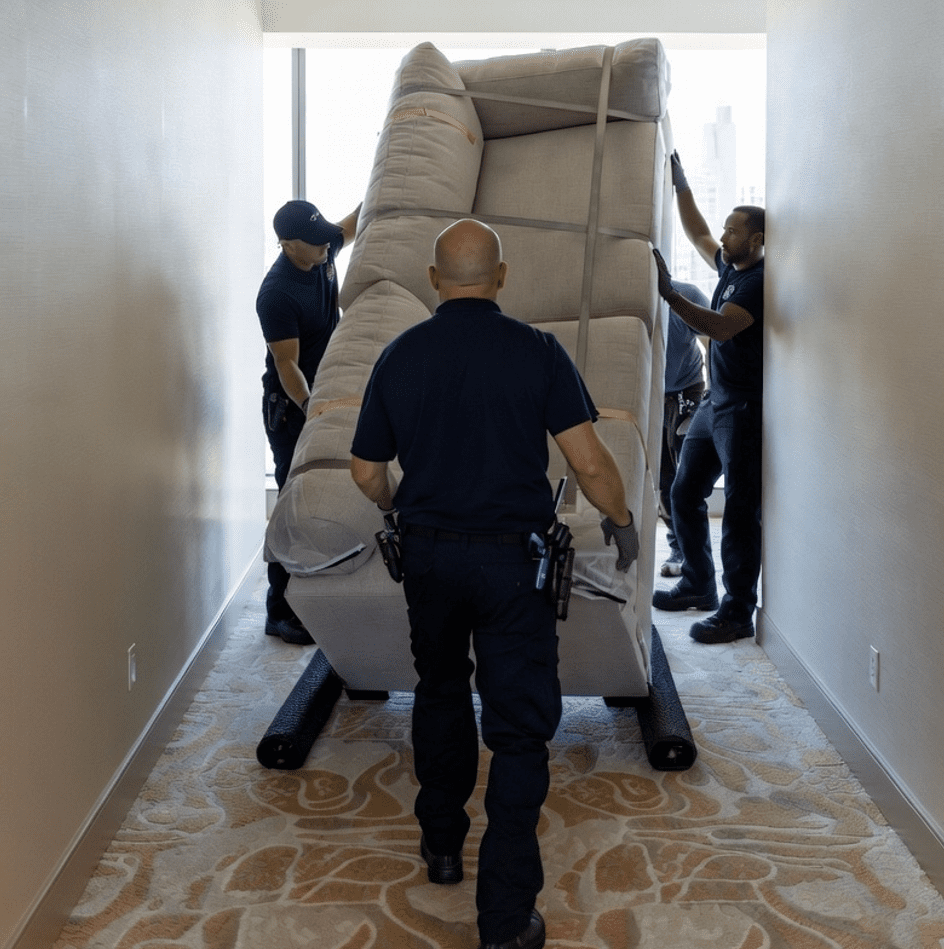
- The Snag: On delivery day, the pieces wouldn’t fit in the building’s small elevator or up the four-flight walk-up staircase without disassembly and reassembly—a service the general white glove crew was not equipped or authorized to perform.
- The Costly Result: The delivery team refused to proceed due to liability. The customer faced a choice: a return with a 10–30% restocking fee or paying for a specialist crew to disassemble, deliver, and reassemble the piece. The primary factor adding cost (and ultimately preventing delivery) was the tight elevator and multiple stairs in an older urban apartment building.
Your Expert Advice: Negotiate Before the Truck Leaves
To negotiate or avoid complex access charges, you must provide transparency upfront.
-
Measure Everything: Thoroughly measure all pathways, including doorways, hallway widths, elevator dimensions, and all stair clearances.
-
Share Visuals: Before finalizing the quote, share detailed photos or a video walkthrough of the path from the street to the final room with the retailer/provider.
-
The Power Move: If possible, request a binding “not-to-exceed” quote that explicitly includes the site specifics you’ve provided. Confirm in writing that your complex access points are covered.
The Luxury Material Multiplier
The construction and materials of your furniture significantly influence the type of white glove carrier required, and consequently, the price. This can increase costs by 20–50%.
| Material Type | Required Service | Price Impact |
| Solid Marble/Glass | Specialized teams with extra manpower, custom padding, and hoisting capability. | Highest Premium (High liability/fragility) |
| Solid Reclaimed Wood | Specialized teams for weight, floor protection, and liability coverage. | High Premium |
| Flat-Pack/Particle Board | Standard white glove teams. | Lowest Premium |
The Value of Specialized Training
The premium cost for handling delicate materials is essentially an insurance policy against catastrophic damage.
Expert Case Study: I recall an instance where a specialized white glove team delivered a heavy marble-top dining table to a high-rise. A standard crew might have forced it through a tight corner, risking cracks or wall damage. The trained team, however, used padded rails, floor protectors, and precise angling—preventing what could have been a $5,000+ replacement claim and significant property damage dispute. The white glove cost is the price of damage prevention.
🌎 Geography, Logistics, and The Future of Pricing
Where you live has a direct impact on your quote.
| Price Tier | US Metropolitan Areas | Reason for Cost |
| Most Competitive | Atlanta, Dallas, Chicago | Major logistics hubs, high volume of distribution centers, and carrier competition. |
| Highest Premium | New York City, San Francisco, Los Angeles | Urban density (traffic, parking), strict building regulations (COIs, time windows), and high labor/living costs. |
The ROI for Retailers
For high-end retailers, paying a premium for white glove delivery is a necessary investment with a clear Return on Investment (ROI):
-
Damage Claims: A significant 30–50% reduction in damage claims.
-
Returns: Up to a 30% decrease in returns due to proper assembly and placement.
These savings on refunds, replacements, and administrative time often offset the premium cost, which is why luxury brands rely on the service to elevate their brand perception.
Expert Prediction: The Cost Driver
Looking ahead, increasing labor and fuel costs will have the biggest impact on raising white glove delivery prices over the next 12–24 months. Ongoing wage pressures, driver shortages, and fluctuating energy prices directly hit operational expenses, outpacing the slower-evolving complexity from furniture designs or high-rise deliveries.
The Final Decision: Is It Worth the Premium?
When deciding between a $200 standard threshold delivery and a $450 true white glove service, the single most important question you should ask yourself is:
“Am I capable and willing to handle the heavy lifting, assembly, and debris disposal myself—or does the piece’s size, weight, or my living situation (e.g., stairs, no help) make professional setup worth avoiding frustration, injury, or damage?”
If the furniture is large, expensive, fragile, or if you have multiple flights of stairs, the white glove premium is not a luxury—it’s a crucial investment in protecting your purchase and your peace of mind.
Ready to Experience the Speedora Standard?
Get a free quote today and discover how our white glove delivery service can redefine your logistics experience.